
Showing posts with label Conservation. Show all posts
Showing posts with label Conservation. Show all posts
Friday, June 20, 2014
Big family next door
We
were taking a stroll, but left the neighbouring mob alone, as they
seemed to be having a great time ~ young and old. How may can you see?


Sunday, July 7, 2013
Kongwak Market


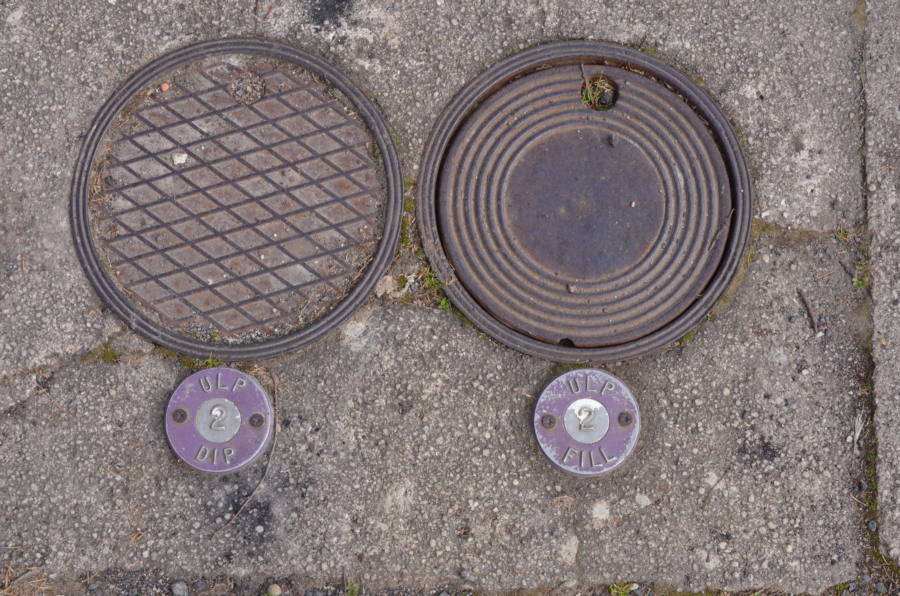
James
Sunday, April 28, 2013
Still life with pumpkin

Sometimes the composition occurs naturally, over time. Winter is coming, the pumpkins are now inside.
James
Sunday, May 27, 2012
Passing Roo
This chap decided to check out our front lawn this Sunday morning.

While people often assume roos actually frolic on Australian high streets, they don't, but a quiet country acreage is certainly fair game.
James

While people often assume roos actually frolic on Australian high streets, they don't, but a quiet country acreage is certainly fair game.
James
Sunday, May 13, 2012
The Museum Time Bomb

Musée des Arts et Metiers as a catalogue and encyclopaedia No.1. Photo: James.
Following on from the Icebergs of Art & Artefact post, I've recently been reading an interesting essay [here] on the role and challenges of the modern museum, by James M Bradburne:
On the one hand, museums that have pursued their traditional educational mission have found that the education they are now expected to provide is increasingly “remedial”—directed at filling gaps in the basic education of an increasingly broad spectrum of users. Increasingly, public funding for museums is tied to meeting specific targets aimed at addressing issues of social inclusion. At the same time, confronted by data that show how limited museums are in providing primary education, the public purse is questioning its return on investment—museums are just too expensive to operate for the relatively brief educational encounter enjoyed (or not) by most users. The cost per visitor of a four-hour visit per year (if the museum is lucky) is out of proportion to the results of a similar investment in the classroom or in the media.Many questions, much to think about in the context of the museum in society.

James
Sunday, February 12, 2012
Icebergs of art & artifact
This article in The Age is actually a good general introduction to the realities of museum and gallery storage and display issues. Like the famous example of the iceberg, most museums and galleries have only a small proportion on show; the rest often being out of view, and often (literally) underneath.

The picture above was taken from a staircase in the Louvre, Paris, while the statistics below relate to the National Gallery of Victoria:
The majority of large, national or significant collection have the majority of their material in store. A global figure is hard to arrive at, but if we had only one fifth of the world's greatest museums artifacts on show we would be doing much better than the current reality. Some figures of major UK collections here show 90% or more in store - that's less than 10% on show.
"At last count, the collection contained about 67,000 works, of which only around 5 per cent can be on public display in the institution's two buildings in St Kilda Road and at Federation Square."

Cataloguing is a lot harder than it looks. Some of these artifacts are labelled 'object' because we don't know what it is, while other equally obscure things are classified thanks to specialist knowledge. Consider the cost of this kind of core museum storage across thousands - sometimes millions of objects, and some of the remarkable costings become understandable.
What's immediately obvious from the figures above is the difference between the art galleries (good percentages on show) and museums - ranking in the ninety-percents in store. That has a lot to do with the nature of artworks vs artifacts. And then there are exceptions like the Wallace Collection, mandated to have it 'all out at all times'. (But the Wallace is an all-around exception, being also prevented from loaning anything out, either.)
Another set of figures here come from checking some of the hyperbolistic writings of a currently fashionable writer on the Smithsonian, in the USA. Though most of what the writer puts in his book is tall tales, here the reality exceeds even his grandiose claims.

Some thing are easier to conserve and store than others. Even so, something as solid as stone can suffer from continuing decay from nasties in the air and rainwater, lichens et al. And how many of these church carvings should be preserved? It's a harder call than it may seem.
It is not that there is 90% more 'cool stuff' socked away, but that most collections have huge volumes of middling interest items that are important in the mass, but generally not individually. There's a huge number of other reasons this stuff's in store - including the plain fact that it's embarrassing. Some items can't be on show much (light sensitive works) or for political reasons (a birds egg collection, once an acceptable country museum cornerstone is a hot topic on show in the 21st century).

A collection of Kestrel eggs in the Oxfordshire Museums store. Once not an uncommon collection, from a scientifically minded person, creating such collections nowadays is essentially illegal. Many museums have such collections, inherited or from confiscated by the police. For obvious reasons putting such collections on show needs to be carefully considered, while they also remain an important biological source.
What are museums and galleries for?
Andrew Sayers, director of the National Museum of Australia, wrote last year: ''We need to redefine museums as educational resources rather than as buildings where collections are held. In fact, it is probably true to say that collections are seen by governments as more of a problem - the source of demands for ever-increasing storage facilities - rather than the assets they are.''Some artifacts are of unarguable permanent display status, a few others should be got rid of. It's the huge number in the area between the two poles that provide the museum and gallery challenge.
James
All images by & copyright the author.
Saturday, January 21, 2012
Well...
...it's been a busy month and a bit, with plenty to blog about, but little chance so far.
It'll be fun to catch up as we go through the photos, reminders and ideas, so stay with us!

The shells seen here were collected from the shore of Endeavour Inlet, South Island, New Zealand, but not brought home. Both Australia and New Zealand are now (rightly) ultra-hot on biohazards, and moving sych things from one country to the other is a big no-no, now.
Still the picture (by Bev) tells a story. We still collect shells on holiday.
Monday, December 12, 2011
Spiny Visitor
As we were getting ready to go out, Bev was more than slightly startled to see a huge lump stuffed up against the back of the fridge in our kitchen, looking like a rolled up jumper with a bunch of knitting needles through it.
It proved to be a somewhat lost echidna! Having checked the risks* we attempted to remove it, which quickly proved impossible. Even dressed with heavy gloves and in my coat, trying to lift an animal the size of a large, fat cat that didn't want to be lifted proved more tricky than you'd think - it seemed to be attached to the floor. Echidnas have very powerful digging claws, and are ideally adapted to grabbing onto carpet - as we found. When the spines started to dig into the wooden wall, we decided to call Wildlife Rescue. Apparently the way you get rid of an echidna is to block off** all but the preferred exit, and it will - when it's good and ready - toddle*** off into the sunset.
We propped the back door open, blocked off the sides of the route as recommended and left it to it, and when we returned some hours later, it had gone.
In the meantime, we'd had a crash course in the details of the echidna, and it is a easily overlooked and fascinating animal; unique or odd in so many ways. I'll just mention that a baby echidna is called a 'puggle' and that they seem to happily go through life for a very long time in a range of climates that we find challenging. If you'd like to know more (you'll be amazed, I'm sure) here's a link to this website that goes into more detail, and also this very amusing website (and more) by a chap that has hand-reared puggles. Well worth a read.

"I'm quite happy here, thank you!" Echidna seen from the rear. [James]
It proved to be a somewhat lost echidna! Having checked the risks* we attempted to remove it, which quickly proved impossible. Even dressed with heavy gloves and in my coat, trying to lift an animal the size of a large, fat cat that didn't want to be lifted proved more tricky than you'd think - it seemed to be attached to the floor. Echidnas have very powerful digging claws, and are ideally adapted to grabbing onto carpet - as we found. When the spines started to dig into the wooden wall, we decided to call Wildlife Rescue. Apparently the way you get rid of an echidna is to block off** all but the preferred exit, and it will - when it's good and ready - toddle*** off into the sunset.
We propped the back door open, blocked off the sides of the route as recommended and left it to it, and when we returned some hours later, it had gone.
In the meantime, we'd had a crash course in the details of the echidna, and it is a easily overlooked and fascinating animal; unique or odd in so many ways. I'll just mention that a baby echidna is called a 'puggle' and that they seem to happily go through life for a very long time in a range of climates that we find challenging. If you'd like to know more (you'll be amazed, I'm sure) here's a link to this website that goes into more detail, and also this very amusing website (and more) by a chap that has hand-reared puggles. Well worth a read.
James.
* Like the related platypus, it does have a pair of spurs, but the echidna's are not poisonous; the spikes are actually modified hairs and aren't ejected, and if non-Australians are wondering, in general it's easier to assume things are dangerous and work back from there - echidnas appear to be dangerous mainly if you fall on one or try and cuddle it...
** Suitcases and boxes are recommended; it will, like a wombat, go through anything like card and plastic if it wants to, by the way.
*** It has a cute as all gait that really is a 'toddle'.
Tuesday, October 11, 2011
Streamline Moderne house in Bendigo

One of the great things about Australia is the range of Art Deco building that are still around, and more importantly used and preserved.

One of our favorites is just on the road out of Bendigo towards Melbourne - a remarkably cohesive house still reflecting the original architect's intention with the building. Strictly speaking it's 'Streamline Moderne' rather than Art Deco, but either way you expect someone in impeccable thirties suiting to drive up in an equally fast open-top tourer. It's one of the houses supported by the Art Deco & Modernism Society.

As the National Trust entry says:
Roseview was designed by Godfrey Eathorne and constructed in 1939. It is one of the few Streamline Moderne houses in the Central Goldfields region, and was one of the earliest constructed in the Bendigo region. It is an outstanding example of this style of housing. It resembles an ocean liner, and reflects the emphasis on the streamlining of methods of transportation. It utilizes both flat and curved surfaces and has little external ornamentation. The use of materials such as rounded glass windows and metal window and door frames reflects an innovative approach to construction consistent with the style.

"A1" as they said then.
PS - in the highly unlikely event of anyone using this blog as a reference, I understand the house is a private dwelling, and thus not open for public viewing.
Wednesday, August 24, 2011
Danish Doors

Doors in the Danish Design Museum. It's the odd details at the sides that distinguish the rooms.
Pic by Bev.
Friday, August 5, 2011
Curl House
Both Bev and I very much enjoyed being shown the architecture of the San Francisco Bay area by Mike and Ania. This one - I think in the Alameda area - gets a special vote.

While the slight weathering and peeling paint could be seen to detract from the design, in a country that over-values neat newness and (sometimes) undervalues architectural originality in vernacular architecture, it provides a different balance.

James
Thursday, April 7, 2011
Peter wasn't fast enough...
...so Toby caught him and that was it.

There's not enough meat on him to justify skinning etc, so he's going to be compost for roses tomorrow.
Sunday, March 27, 2011

Thursday, February 3, 2011
Passing Eagle
 We've seen a pair of Wedgetails flying around the area, but this was a solitary example - he managed to climb a terrific amount in the thermals from a few hundred feet when NW of us to between 1,000 - 2,000 ft a kilometre to the south. As the Wikipedia link states:
Their keen eyesight extends into the infrared and ultraviolet bands. This helps them spot prey and allows them to see rising thermals, which they can use to gain altitude while expending little energy.
One up on the glider pilots!
James
Monday, October 18, 2010
Reflections, light and water in Wellington
 I don't think this café was always a café, you know. And how 'HB' can be the initial letters for 'Clothing Factory' beats me.
 Mermaid in the Museum of Wellington City & Sea
 Keep right in the cablecar.
 Blue skies and the observatory
 Maori carvings awaiting erection
 I think the market will crash soon.
 ...
... Pretentious architecture and blue lights.
 Cause sunbathing later
 Restaurant & fishing boat
 Hooked on Scotland.
 The light in the old cathedral.
 And the words on the University Bookshop.
 amam Wag.
 Wake.
Wake. Beached boat.
 Beached whale?
 Protected stream.
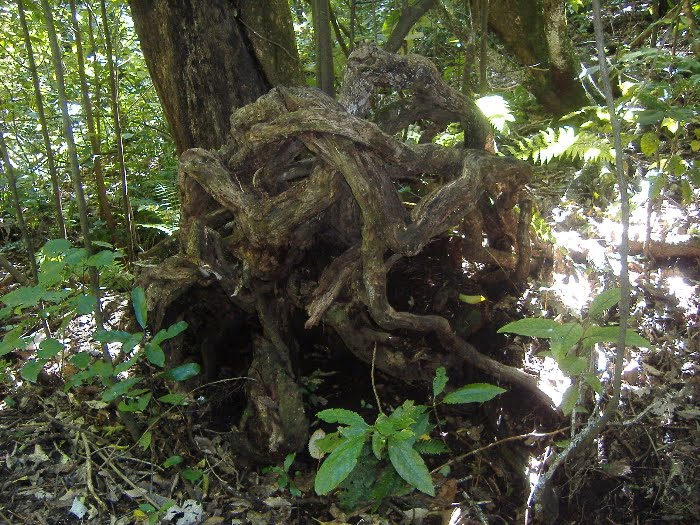 Gordian knot.
And more on the wonders of windy Wellington soon.
James
Subscribe to:
Posts (Atom)


 Posts
Posts


